


1. What is Chlorine?
Chlorine on its own is a basic element (Cl on the periodic table of elements), It is a gas, and in its purest form can be dangerous. Luckily for us, we very rarely encounter chlorine in its pure form. More often, we encounter chlorine as part of a compound that has neutralized its dangerous features and has left us with a useful, safe and valuable compound that we rely on in a surprising number of ways. While its easy to recognize things like pool chlorine and chlorine bleach, we also have table salt (NaCl) to flavor our food and provide electrolytes, magnesium supplements (MgCl2) to ease muscle pain and support heart health, we even use potassium chloride (KCl) to fertilize crops. We’re sure you get it…chlorine is all around us and its good to us, so why does it make pools and spas so ‘icky’? Read on to learn how to make the most of this incredible sanitizer.
2. Why Do We Use Chlorine in Water?
The short answer, is to keep us safe and alive. But the longer answer is actually really really interesting. Chlorine, in a number of compounds can reliably convert into hypochlorus acid when it mixes with water. Interestingly, hypochlorus acid is also produced by our own white blood cells to help fight infection. That makes it a particularly effective sanitizer for keeping water safe. In fact, chlorination of municipal water supplies is credited with increasing the human lifespan considerably.
3. Why Does My Skin React?
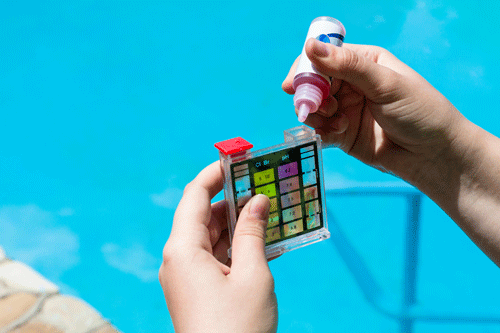
In short, almost all skin irritation from being in a chlorinated pool or spa is due to pH. Chlorine is a fantastic santizer and you’ve likely seen things like test strips and test kits, which include a way to measure the pH of the water. You likely also know that pH is a measure of how acidic or how basic something is. And thats where things get important when it comes to chlorine, pool or spa water, and your skin. Chlorine behaves best when the pH is between 7.2-7.6. This ‘Goldilocks zone’ is where chlorine sanitizes and off gasses at its most efficient. When chlorine is not able to be efficient, you need a lot more of it. Now, your skin also has an ideal pH setting and luckily, there is an overlap with chlorine, but if the pH is too low, your skin is easily irritated, and if the pH is too high, you guessed it…your skin is easily irritated. It’s this combination-bad pH and inefficient chlorine that can leave your skin uncomfortable after a dip. Add to this the ability for bacteria to be present in poorly sanitized water, and you have yet another element to irritate your skin.
4. But The Water Stunk Like Chlorine!
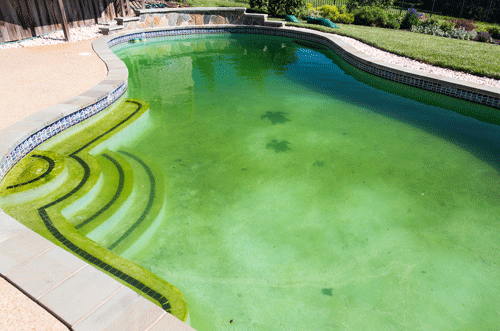
It probably did! thats one of the reasons chlorine gets blamed for the bad reaction, but what you’re smelling is a byproduct of ‘spent’ chlorine called chloramides. When chlorine kills bacteria and pathogens, it creates chloramides, and those chloramides off gas, leaving clean water behind. And, just like how chlorine reacts to pH, the chloramines do too. An important part of that off gassing process-the pH being in balance-will not only make your chlorine more efficient, it will help your water not smell.
The Bottom Line: Don’t Blame the Chlorine, Check the pH!
If you experience itchy skin, red eyes, or a strong chemical smell after swimming, chlorine may not be the real culprit. Poor pH balance, chloramines, and improperly maintained water can all contribute to discomfort.
The good news? Regular water testing, keeping pH in the proper range, and maintaining the right chlorine level can make a big difference in your swimming experience. In both pools and spas, balanced water helps chlorine do its job effectively while keeping your water comfortable and enjoyable.
So before you swear off chlorine, have your water tested-we perform free water testing at each of our locations and can help you understand what your water needs. With the right water care, you may find that you can enjoy your pool or spa without the irritation you once blamed on chlorine.