

Nothing can ruin the look of a beautiful pool faster than an algae bloom. Whether you’re dealing with green, mustard, or black algae, identifying the problem early is the key to choosing the right treatment. In this guide, we’ll explain how to identify the most common types of pool algae, what causes them to grow, and the best ways to eliminate them—and keep them from coming back.
Frequently Asked Questions
What causes algae to grow in a swimming pool?
Algae thrives when conditions are favorable. Low sanitizer levels, unbalanced water chemistry, poor circulation, warm temperatures, organic debris, and high phosphate levels can all contribute to algae growth. Regular maintenance and proper water chemistry are the best defenses against algae blooms.
Can I swim in a pool with algae?
It’s best to avoid swimming in a pool with visible algae. Algae can make pool surfaces slippery, reduce water clarity, and indicate that sanitizer levels are too low to effectively control bacteria and other contaminants. Treat the algae first, then confirm your water chemistry is properly balanced before swimming.
What’s the best way to prevent pool algae?
Prevention starts with consistent pool maintenance. Keep sanitizer levels within the recommended range, brush and vacuum your pool regularly, maintain good circulation and filtration, remove leaves and debris promptly, and test your water frequently. Periodic phosphate testing and treatment can also help reduce algae’s food source.
Do I always need an algaecide?
Not necessarily. Many small green algae blooms can be eliminated with proper water balance and a chlorine shock treatment alone. However, algaecides are valuable for treating stubborn algae, preventing future blooms, and managing more difficult varieties such as mustard and black algae.
Why does algae keep coming back?
Recurring algae usually points to an underlying issue. Poor circulation, inadequate sanitizer levels, hidden algae in filters or behind ladders and lights, elevated phosphate levels, or inconsistent maintenance can all allow algae to return. Identifying and correcting the root cause is just as important as treating the visible bloom.
1. Know Your Algae
Before choosing a treatment, identify the type of algae in your pool. The good news is that algae is usually easy to recognize by its color.
The three most common types are:
Green algae
Mustard (yellow) algae
Black algae
Each type behaves differently and responds best to a specific treatment. Once you’ve identified the algae, you can choose the right approach.
2. Prep for Success
Before treating any algae bloom:
Make sure your pump and filter are operating properly.
Clean or backwash the filter if needed.
Balance your pool water, especially the pH.
Proper water chemistry allows chlorine and algaecides to work much more effectively.
3. Green Algae
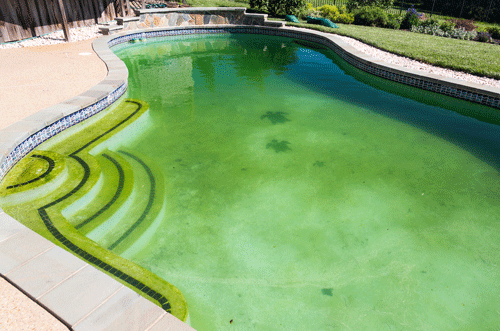
Green algae is the most common type and the easiest to eliminate. It often begins on the walls or steps before spreading quickly throughout the pool.
After balancing your water, shock the pool with chlorine. If the bloom persists, follow with an algaecide such as Pool First Algaecide 60 or E-Z Clor Super Green Algaecide. Once the algae is gone, these products can also be used to help prevent future blooms.
4. Mustard (Yellow) Algae
Mustard algae is more resistant than green algae and often requires a more aggressive treatment.
Balance the water, apply a double shock treatment, then follow with a copper-based algaecide. If your pool uses well water or you regularly add copper-based products, have your copper levels tested occasionally to help prevent staining or water quality issues.
5. Black Algae
Black algae is the most difficult type of algae to remove because it develops deep roots in porous pool surfaces and forms a protective outer layer that resists chlorine.
Treatment requires:
Consistently elevated chlorine levels during treatment.
A quality silver-based algaecide.
Thorough brushing to break the algae’s protective coating.
Steel-bristle brushes should only be used on plaster or concrete pools. Vinyl liner and fiberglass pools require brushes designed specifically for those surfaces.
For ongoing prevention, many pool owners also use a mineral-based product such as PoolRx while maintaining proper sanitizer levels and routinely brushing the pool.
6. Eliminate Algae’s Food Source
Warm water, sunlight, leaves, fertilizer runoff, and other organic debris create ideal conditions for algae growth. One of algae’s primary food sources is phosphates.
After eliminating an algae bloom, have your water tested for phosphates. If levels are elevated, use a phosphate remover and consider a maintenance dose throughout the season to help discourage future blooms.